Discuss Your Custom Control Board
When Does Your Equipment Need a Custom Control Board?
A ready-made controller may meet your requirements when its connections, dimensions and available functions fit the equipment. A custom board becomes relevant when you need a different combination of signals, a particular operating sequence or hardware that fits an existing enclosure and wiring arrangement.
Typical discussions begin with a practical limitation: the available board has unsuitable connectors, the required sequence cannot be configured, or several separate modules need to be considered as one control system. The first step is to establish whether a new design, a revision or a programming task is appropriate. Custom development is assessed against the application rather than assumed to be the lowest-cost option.
For machine builders and equipment integrators, the useful question is: what must this controller do within the complete machine? A clear answer guides both circuit design and automation programming. For an overview of the wider service scope, see our custom circuit design and automation programming services.
Define Inputs, Outputs and the Operating Sequence
Before selecting the microcontroller or laying out a PCB, define the signals the board will receive and the actions it must command. A device name alone is not enough: two sensors can have different electrical outputs, and two loads can require different switching arrangements.
| Requirement | Information to discuss |
|---|---|
| Inputs | Signal source, electrical characteristics and the condition each signal represents. |
| Outputs | Connected device, supply, load information and required control method. |
| Sequence | Order of operations, timing, enabling conditions and the event that ends each step. |
| Startup and interruption | Required behavior after power-up, a stop command or loss of an expected signal. |
| Communication | The other device, interface information and data to exchange, if required. |
| Mechanical constraints | Available space, mounting points, connector access and wiring layout. |
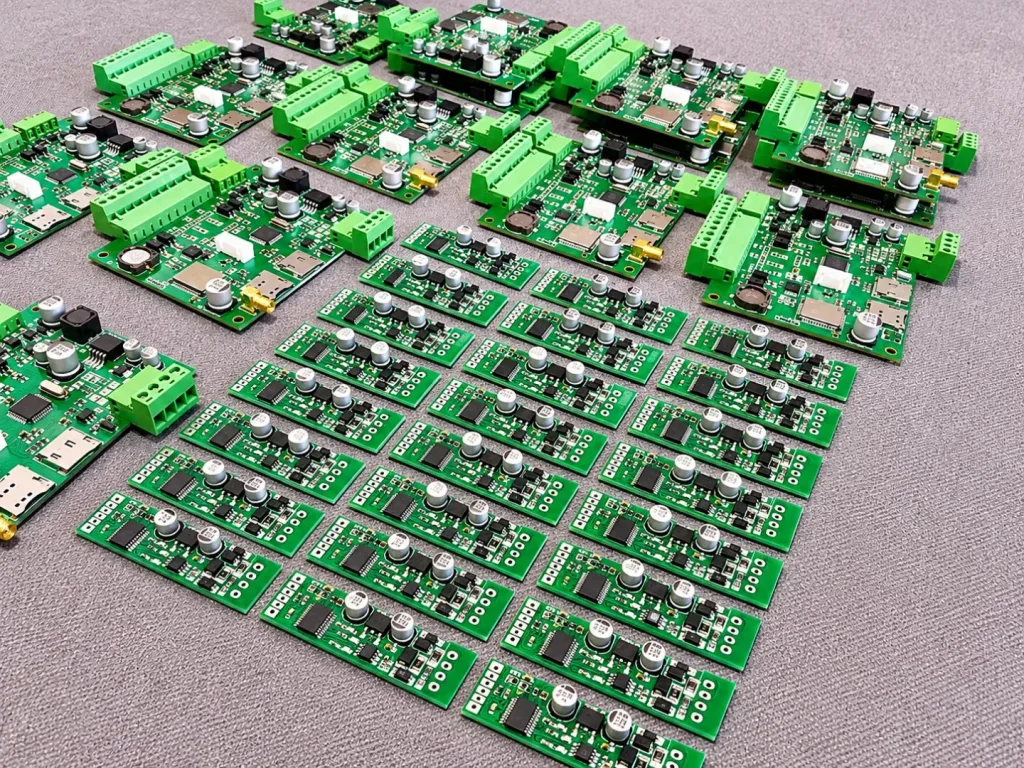
As a simple specification example, an input event may request an action, but the controller must first check an enabling condition. It then issues the command and ends the action when a defined event occurs. This example explains how to describe logic; it does not identify the functions of the boards pictured here.
Hardware Design Around Your Connections and Enclosure
A custom control board must connect to the actual equipment. Connector placement, mounting holes, board outline and cable access are therefore part of the design discussion. Share enclosure drawings or measurements early, especially when the board must fit an existing product.
KiCad can be used for schematic capture and PCB layout within the project. The circuit and layout work are planned around the agreed power supply, interfaces and component requirements. A design review checks the relationship between the schematic, selected footprints and physical layout before any fabrication stage included in the quotation.
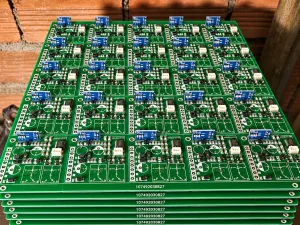
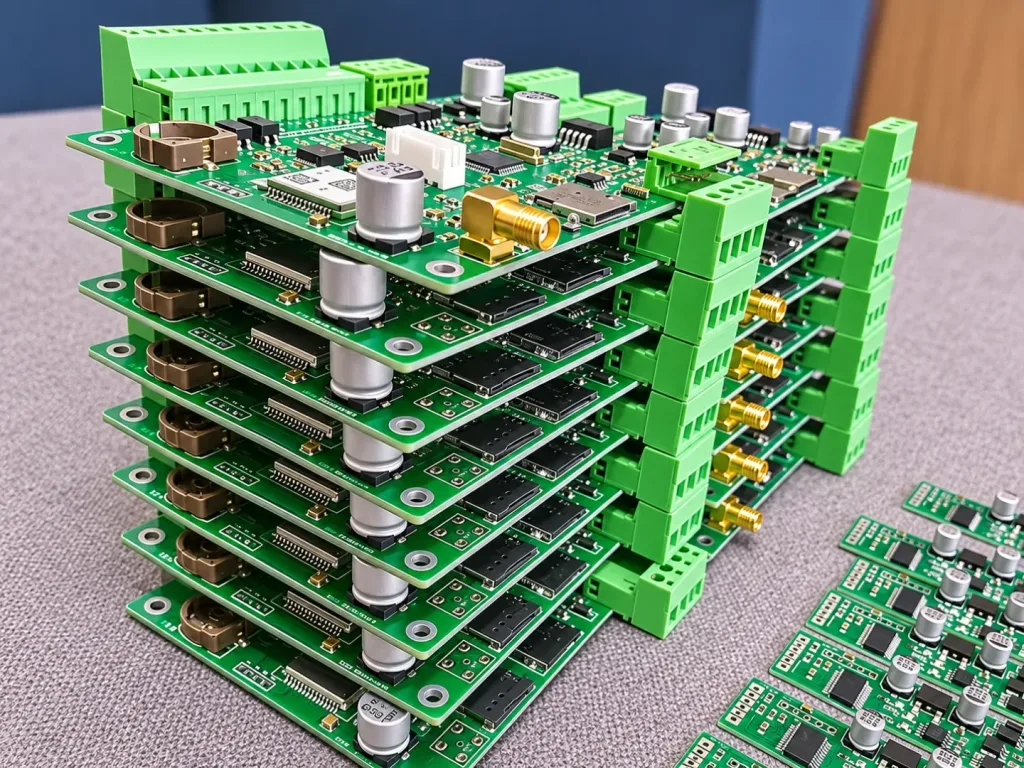
Prototype boards, assembly and additional quantities are scope items to confirm. Images of several boards show different physical arrangements, but do not establish production capacity, test results or a standard configuration for every order. The board for your application is specified separately.
Embedded Firmware and STM32 Control Programming
Embedded firmware gives a controller its operating behavior. It reads the specified inputs, manages the sequence and commands outputs through the agreed hardware interfaces. The program must also account for operating modes, transitions and the response expected when an operation is interrupted.
STM32 control board programming can be included where the selected platform suits the application. The particular microcontroller and peripherals depend on the requirements. A request should describe the behavior needed rather than assume that every STM32 device or existing board offers the same capabilities.
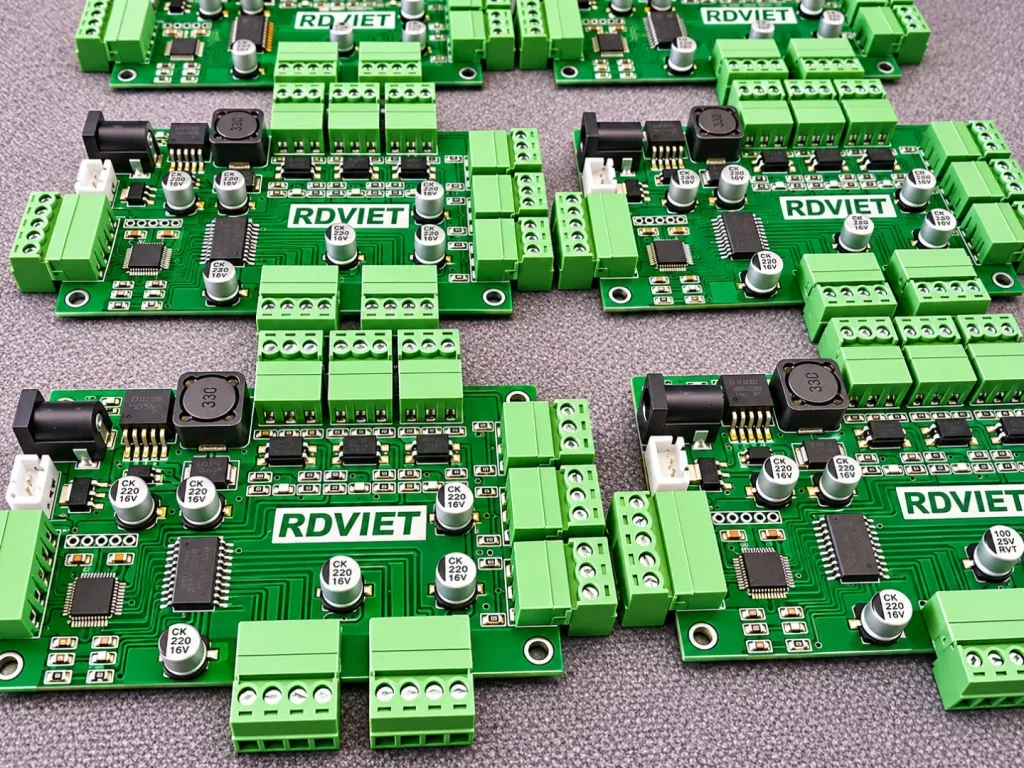
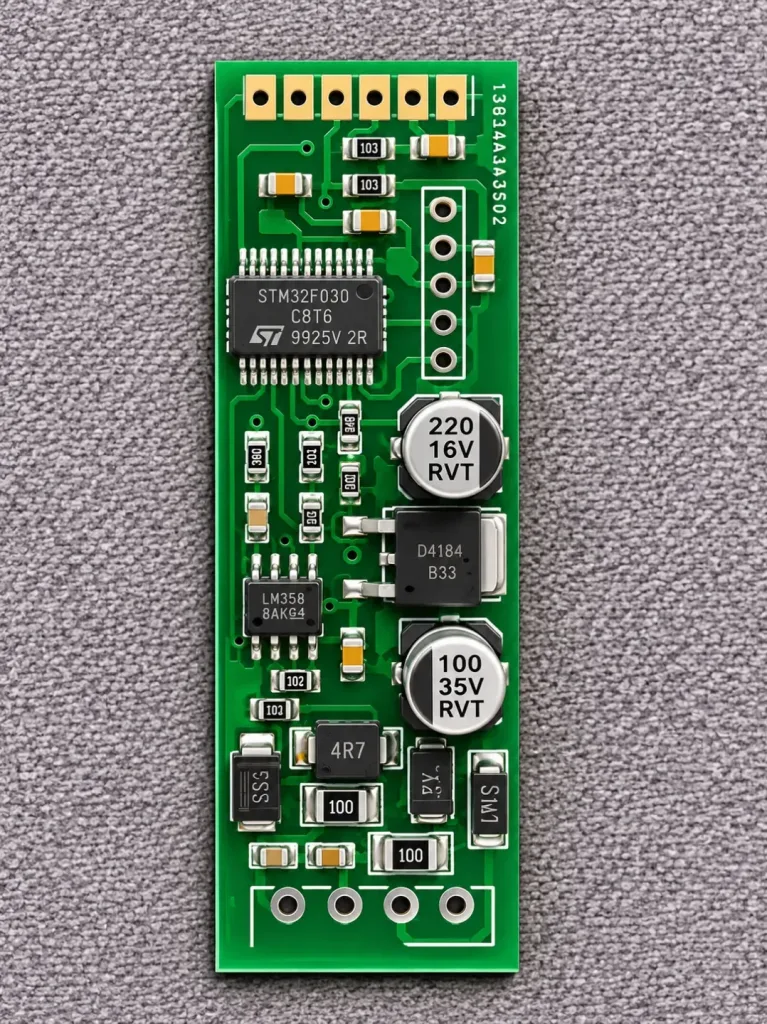
Hardware design and firmware are scoped together around the required functions, signal interfaces and installation constraints. The compact board below carries an STM32 marking; the photo illustrates a hardware form factor rather than a verified firmware feature set.
Planning firmware for a custom electronic product? Explore our embedded firmware and microcontroller programming services for the information needed to scope development, functional checks and delivery.
For schematic development, board dimensions, connector placement and layout requirements, see our custom PCB design and KiCad layout services. Hardware and programming can be scoped together for the product.
Interface and Output Stages for the Application
The controller’s logic and the connected load need a suitable electrical interface. Before defining an output stage, identify the load type, its supply requirements, operating conditions and control method. These details influence component selection, wiring and thermal considerations.
Where sensors or other equipment are connected, their electrical characteristics must also be established. The interface is designed around those requirements rather than inferred from the shape of a connector. Any machine-level safety requirements and responsibilities should be identified when the scope is discussed.
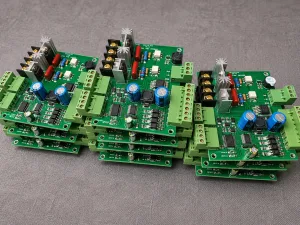
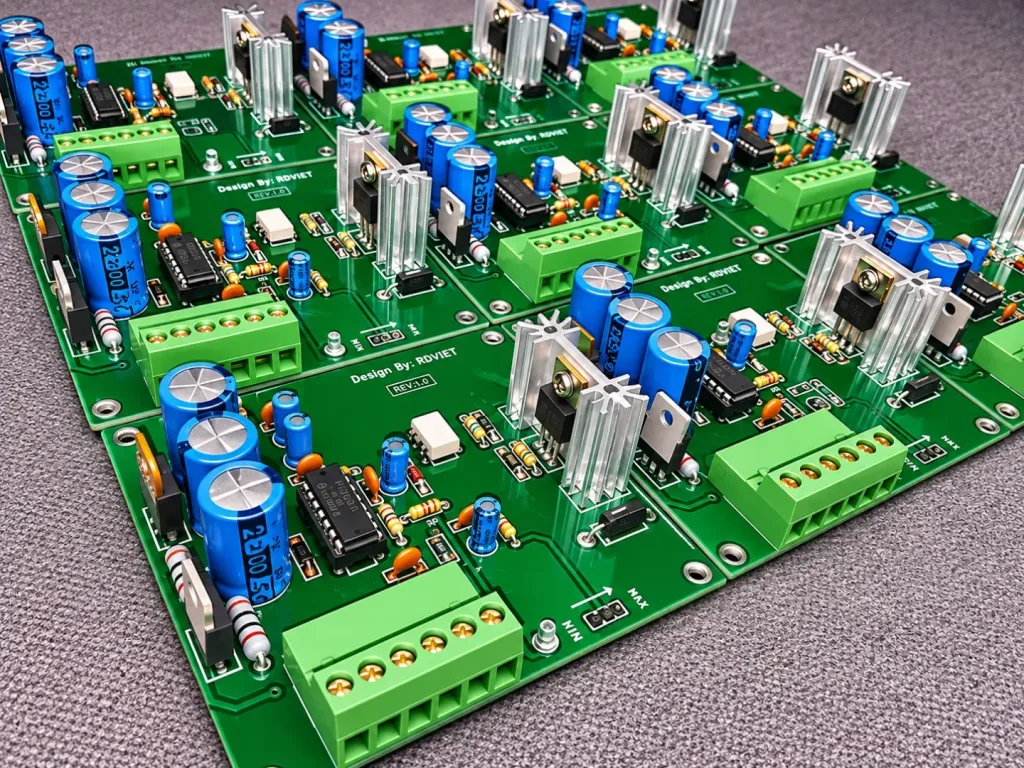
The following assemblies show capacitors, screw terminals and heat sinks. A component’s printed rating is not the operating rating of the whole board. Voltage, current, function and acceptance criteria must be specified for the project.
Agree on Functional Checks and Delivery Before Development
Useful acceptance conditions describe behavior that can be observed. For each required function, agree the input or command, the expected response and the conditions under which it should occur. For a sequence, include how a step starts, how it ends and what should happen after an interruption.
- Which input conditions permit an operation to begin?
- What output response should be demonstrated?
- Which event or timing condition moves the system to the next step?
- What state is required after power is restored?
- Which equipment and test conditions will be used for acceptance?
These questions help define the development work and the agreed functional checks. They do not imply a particular test standard or certification. Testing the complete machine and responsibilities for integration are discussed separately where applicable.
Delivery may include the finished product only. Source code, design files and documentation are provided only when included in the scope and price agreed at the start. If your team needs firmware source, native KiCad files or particular manufacturing documents, list them in the initial request. File delivery and the applicable usage rights must be agreed explicitly.
Additional functions, files or support requested later are reviewed for their effect on scope, price and schedule before proceeding.
What to Send for a Control Board Development Quote
Send a concise description of the equipment and the control problem you need to solve. Existing photos or a simple sequence diagram can make the discussion more productive. Include as much of the following as is available:
- Application: what the machine or device does and what the new controller should change.
- Operating sequence: steps, timing, start/stop conditions and expected restart behavior.
- Connections: sensors, loads, power supply, wiring information and communication requirements.
- Physical requirements: board dimensions, mounting, enclosure and connector access.
- Order requirements: expected quantity, target schedule and any known constraints.
- Delivery scope: finished product only, or a specifically agreed set of code, design files and documents.
Missing information can be identified during the initial discussion. The quotation follows the agreed requirements; no fixed development price or lead time is assumed before the project is assessed.
Send Your Control Board Requirements
Frequently Asked Questions
Can you develop a board for my machine’s operating sequence?
We discuss custom board development around the specified sequence and interfaces. Send the required behavior and available equipment information so feasibility, scope and price can be assessed.
Can hardware design and firmware be included in one project?
Yes, both can be included when agreed in the quotation. Individual hardware or programming tasks can also be discussed based on the information available for the project.
What information is needed about sensors and connected loads?
Provide model references or technical information, the power supply, signal characteristics and wiring details. Connector photos are helpful, but do not replace electrical specifications.
Is the source code included with a finished controller?
Not automatically. The price and delivery scope are agreed from the initial requirements. A finished product may be supplied without source code or design files; these are provided only when expressly included.
Can I request more than one board after development?
Further quantities can be discussed. Board revision, component availability, assembly requirements, price and schedule need confirmation for the requested order.
Discuss Your Custom Control Board with Us
Tell us what your equipment needs to do and share any available photos, wiring information or operating sequence. We will discuss the development requirements and the delivery scope you need before confirming a quotation.
RDVIET757/44 Nguyen Anh Thu Street, Trung My Tay Ward, Ho Chi Minh City, Vietnam
WhatsApp / phone: +84 908 234 734